
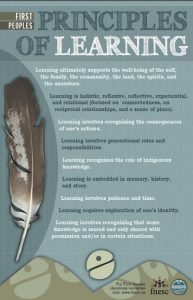
Living and Teaching the First Peoples Principles
Whether you are new to the profession or a seasoned professional, teachers in BC are called to consider how they might incorporate the First Peoples Principles of Learning (FPPL) into their classrooms and schools. Why? The Truth and Reconciliation Commission Calls to Action and the BC curriculum requires teachers to consider and incorporate […]
Taking a Class Temperature
Taking a class temperature means checking in with students to see how they are doing. By checking the emotional temperature of the students (ex. seeing how students are feeling, their energy level, etc.) teachers can better understand what their students need and what they are capable of doing in that moment. In this way, teachers […]
Species ID: whose names are these?
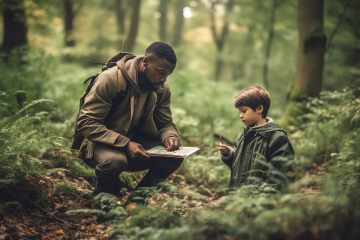
Engaging in species identification and classification is a common and, many would argue, necessary aspect of science education. There are many tools, digital and analogue to assist us as we explore and learn about the world around us. In a recent collaboration with the Education Library, we showcased a few resources and approaches to support […]
Generative AI: Possibilities and Challenges for Educators
“Cyborg writing must not be about the Fall, the imagination of a once-upon-a-time wholeness before language, before writing, before Man. Cyborg writing is about the power to survive, not on the basis of original innocence, but on the basis of seizing the tools to mark the world that marked them as other.” ~ Donna Haraway […]

Classroom Discussions
What are classroom discussions? Classroom discussion can be defined as an oral activity where teachers and students develop together a specific curriculum content or competency through each other ideas. “The purposes of a discussion are to build collective knowledge and capability in relation to specific instructional goals and to allow students to practice listening, speaking, […]
